


Every year, building managers, facility managers and building owners across New South Wales face the same recurring obligation: lodging an Annual Fire Safety Statement (AFSS). And every year, a surprising number of them leave it to the final days — only to discover their sprinkler valve has a defect; their Fire Safety Schedule is incorrect, or no Accredited Practitioner is engaged to assess and endorse (sign) one of the measures.
Late lodgement isn’t a minor administrative slip. Under the Environmental Planning and Assessment Regulation 2021, a penalty can apply for every day a statement remains overdue. That is before we even talk about insurance exposure, tenant safety, or the reputational hit for a manager juggling dozens of buildings.
The fix is simple, but it has to start early. On this page link: https://2020fireprotection.com.au/documents/ is a checklist 2020 Fire Protection recommends is filled out at least 6 months in advance for every building.
What the AFSS actually states:
Before jumping into the timeline, it helps to be clear on what you are signing. An Annual Fire Safety Statement is the owner’s formal declaration to council and NSW Fire and Rescue that each Essential Fire Safety Measure listed on the building’s Fire Safety Schedule has been inspected and assessed within the last 90 days, and was found capable of performing to the standard it was designed for. It is not a certificate of maintenance, and it’s not a building compliance certificate. It is a life-safety statement of performance, and every measure on the schedule must be covered. That is why the work to endorse each measure sits with an Accredited Practitioner (Fire Safety), and why the timeline below matters.
Month –3-12: Get organised:
- Locate your current Fire Safety Schedule (FSS). This is the document issued by your local council (or accredited certifier at occupation) that lists every Essential Fire Safety Measure installed in the building and the standard each is assessed against. If you cannot find it, you must request a copy from council. It may not be created by an Accredited Practitioner.
- Confirm your due date. Your AFSS must be lodged within 12 months of your last statement. Mark the anniversary in your calendar — and mark three months out as the non-negotiable starting gun.
- Engage your Accredited Practitioner (Fire Safety). Under current NSW law, only an AP(FS) accredited under the FPAS scheme can assess each Essential Fire Safety Measure. Booking early avoids the end-of-quarter queue that every fire safety provider faces.
Month -2: Assess and remediate
- Schedule inspections for every measure listed on the FSS. Expect a full working day, or several days for larger buildings.
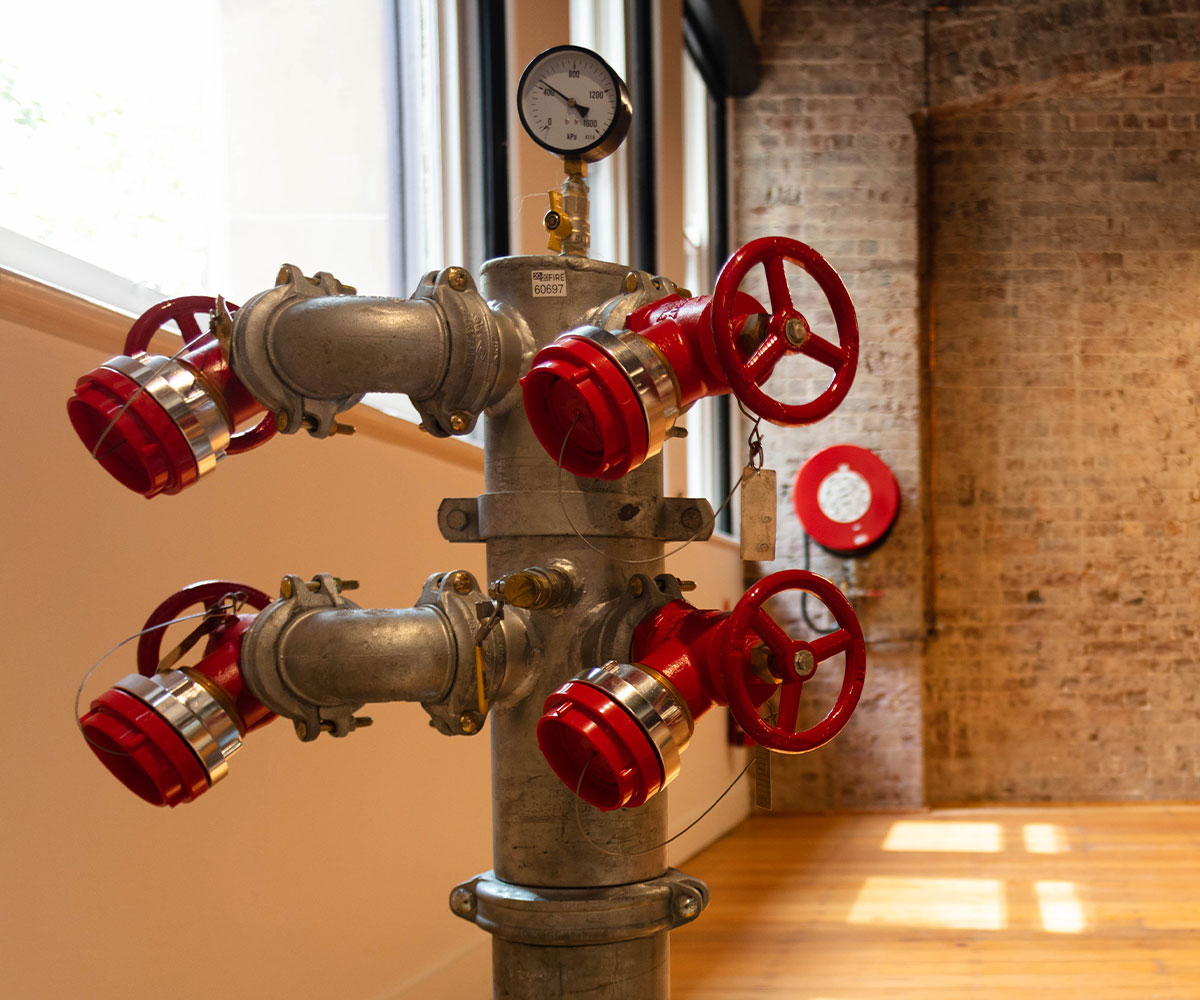
- Address defects immediately. Common issues include non-compliant exit signs, seized hydrants, non-functioning sprinkler components, or fire doorgaps and failed exit lights. If remediation works are needed, they must be completed and re-assessed before your AP(FS) can endorse those measures.
- Review your FSS for accuracy. If the building has been modified, new measures may be required or old ones removed. Correcting an inaccurate schedule can take weeks, might need a certifier or fire engineer involved – so catch it now.
Month -1: Final compliance
- Close out remaining defects and gather endorsements for all performing measures.
- Collect documentation. Your AP(FS) needs evidence of their assessment and this may include documentation of routine services under AS 1851 and the specific design standard for each measure — to support their certification.
- Receive your completed assessments. Your Accredited Practitioner endorses (signs) each Essential Fire Safety Measure. Review the statement and ensure it matches every item on your FSS before lodging.
The submission window
- Lodge with your local council and NSW Fire and Rescue. Many councils require online lodgment and some have fees attached. For the NSW Government’s guidance on AFSS requirements and templates, see the NSW Planning Portal – Fire Safety Certification page.
- Display a copy prominently at the entrance of the building, as required by regulation.
- Retain the statement and all supporting assessments for at least ten years.
After submission
- Set a reminder for six months ahead. That is the trigger to start next year’s cycle.
- Keep your AP(FS) and their firm engaged for routine inspection, testing and maintenance throughout the year. Buildings with continuous programs face far-fewer last-minute surprises.
The hidden risk of leaving it to the last week
Even with a willing provider, last-minute AFSS work is risky. If an AP(FS) arrives and finds a defective measure, the statement cannot be signed. You are then racing a legal deadline to engage a repairer, complete works, arrange re-assessment, and lodge — often across multiple trades — in a matter of days. The cost of expedited works typically dwarfs the cost of planned maintenance, and the consequences of missing the lodgment date can include massive fines, council enforcement action or fire orders, and difficult conversations with insurers if an incident occurs while the building is technically non-compliant.
How 2020 Fire Protection helps
Our team includes Accredited Practitioners (Fire Safety) authorised to assess every one of the 36 x Essential Fire Safety Measures in NSW buildings. We build a 12-month maintenance and compliance calendar for each building we manage, so when the annual statement is due, it is a formality rather than an emergency. For a visual overview of the process, see our AFSS timeline.
If you are more than two months out from your due date and have not started, let’s talk urgently.
If you are less than one month out, let’s talk NOW.