


When an owner signs an Annual Fire Safety Statement in New South Wales, they are certifying something very specific: that each Essential Fire Safety Measure installed in their building has been assessed by an Accredited Practitioner and was found capable of performing to the standard of performance it was originally installed to meet. That sounds straightforward — until you ask what an Essential Fire Safety Measure actually is, and where the list comes from.
Understanding your building’s Essential Fire Safety Measures is the foundation of every AFSS. Miss one, and your statement is non-compliant. Include something that is not installed, and you have made a false declaration. Here is what every building, facility manager and building owner should know.
The starting point: Your Fire Safety Schedule
Your building‘s Fire Safety Schedule is the legal document that lists every Essential Fire Safety Measure required in your building, together with the minimum standard of performance each must meet. It is issued by the local council (or accredited certifier) when a building is approved, occupied, or significantly altered.
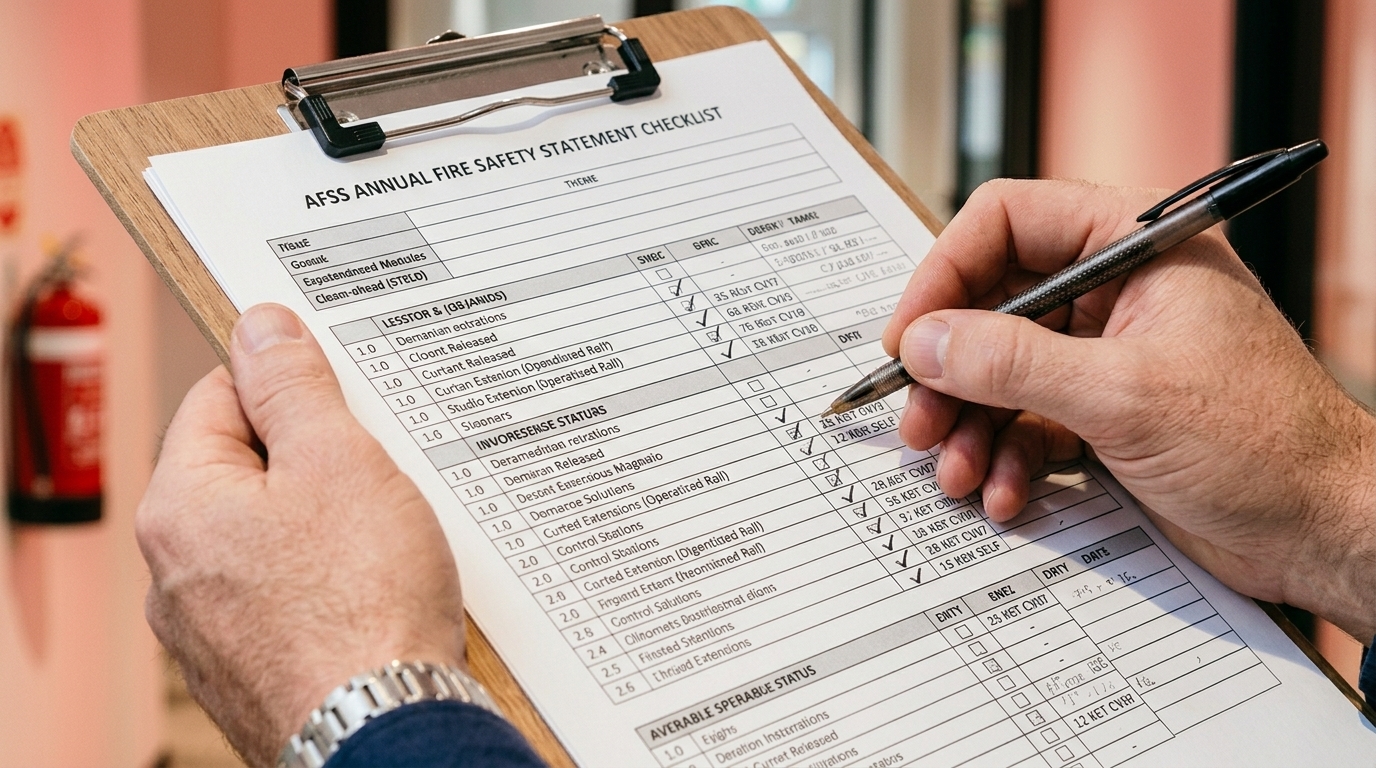
The AFSS is not an opportunity to decide what to certify. It is a direct response to the Fire Safety Schedule: every measure on the schedule must appear on the statement, each endorsed (signed) by an Accredited Practitioner (Fire Safety).
If you do not know where your Fire Safety Schedule is, you must request a copy from local council before anything else. For the NSW Government’s overview of fire safety certification and AFSS requirements (including the official statement template), see the NSW Planning Portal – Fire Safety Certification page.
Common Essential Fire Safety Measures
The exact mix depends on the building’s class, size, and use, but most schedules in NSW include some combination of the following.
Automatic fire sprinkler systems — permanently pressurised pipework with heat-activated heads. These are the single most effective measure for fire suppression, assessed against AS 2118 and serviced under AS 1851.
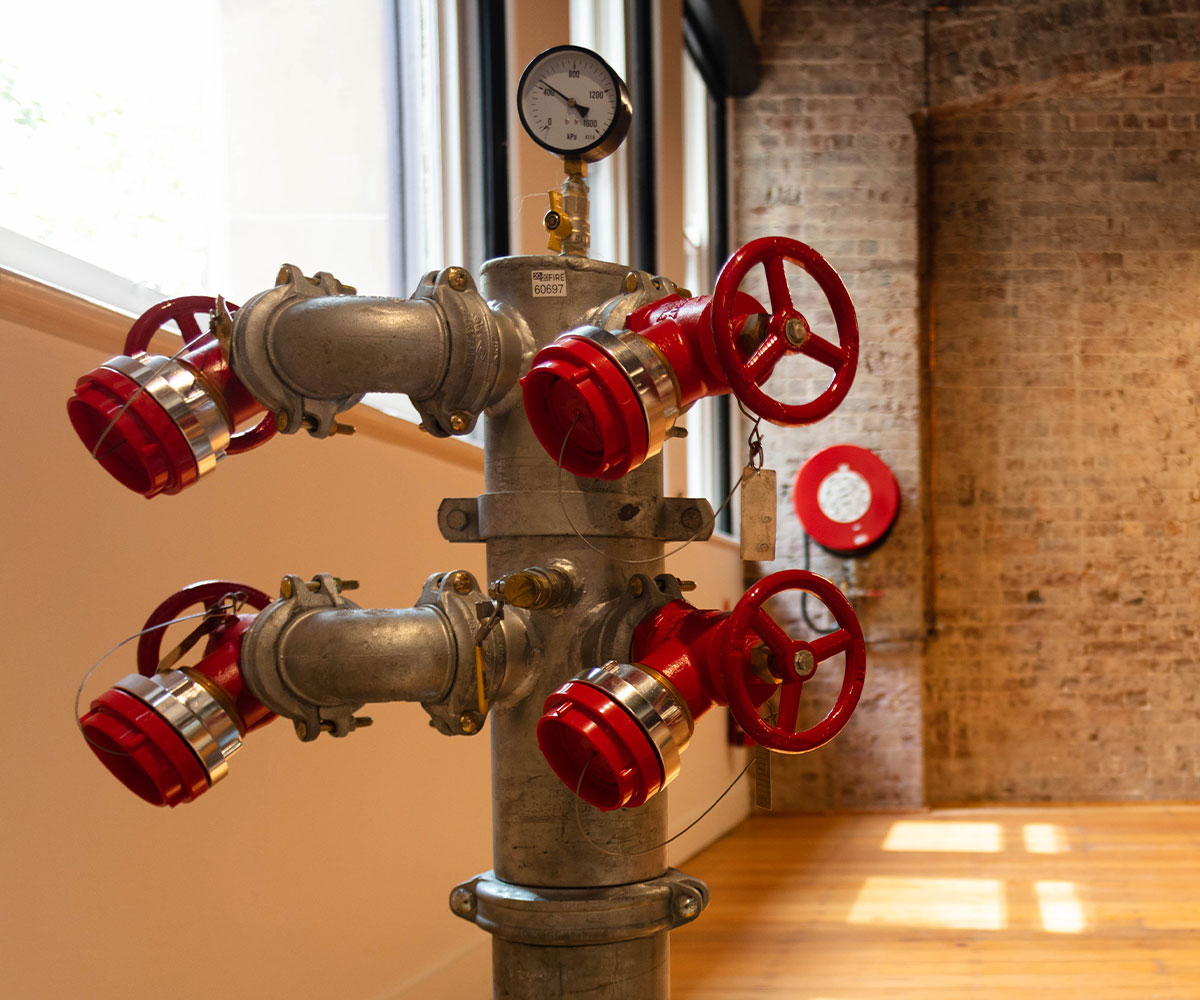
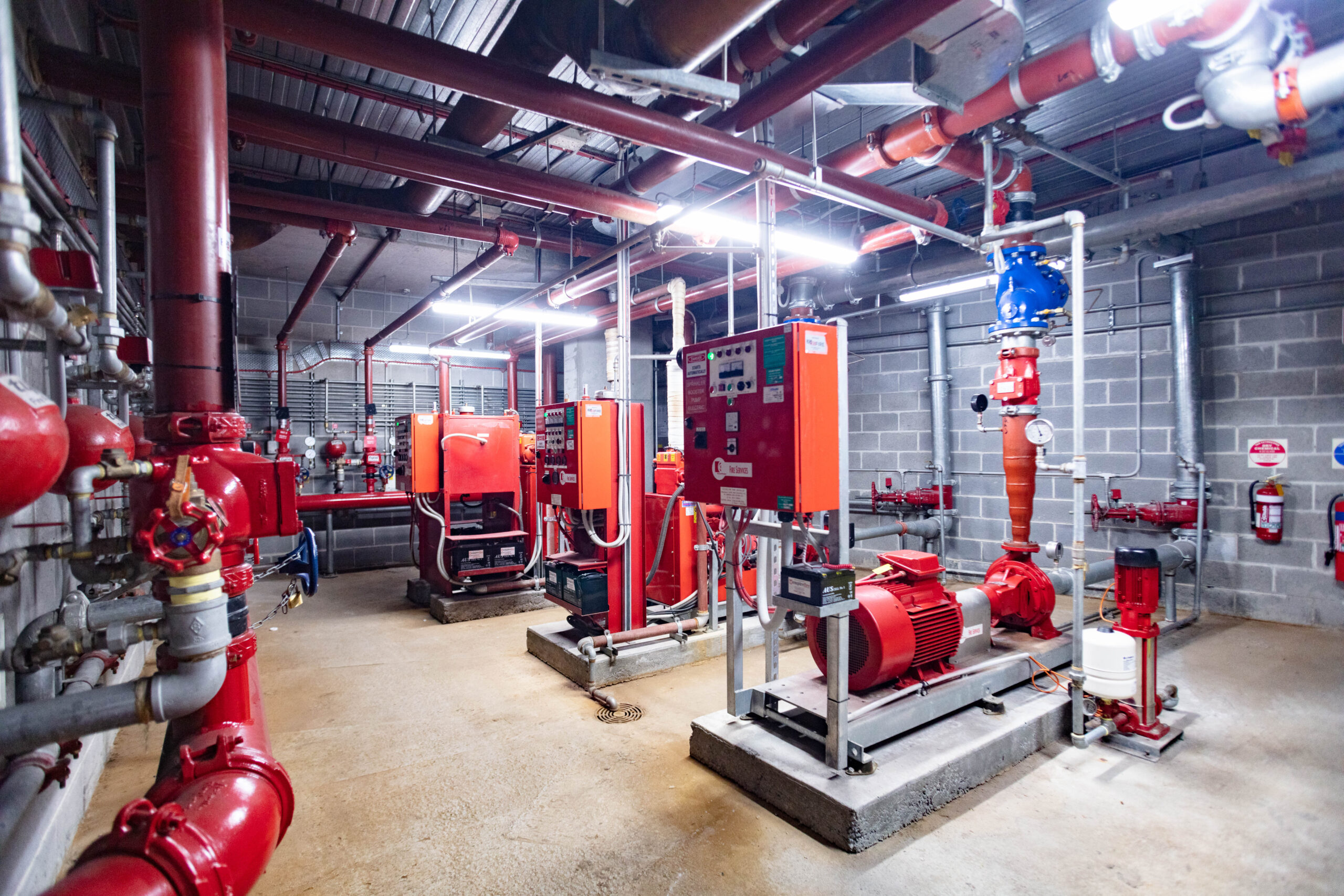
Fire hydrant systems — the hydrants, booster assembly, and pumps used by Fire and Rescue NSW on arrival. A failed booster is one of the most common reasons an AFSS cannot be signed.
Fire hose reels — first-attack equipment for occupants, assessed against AS 2441.
Portable fire extinguishers and fire blankets — covered under AS 2444 and routinely inspected under AS 1851.
Emergency lighting and exit signs — the lighting that stays on for 90 minutes when mains power fails, and the illuminated signage that directs occupants out and allows fire fighters to safely enter and rescue you. Assessed against AS 2293.
Fire doors and fire-rated construction — doors, walls, floors, and penetrations that hold the compartments of the building intact during a fire. Fire doors in particular must be inspected regularly to confirm they still close, seal, and self-latch.
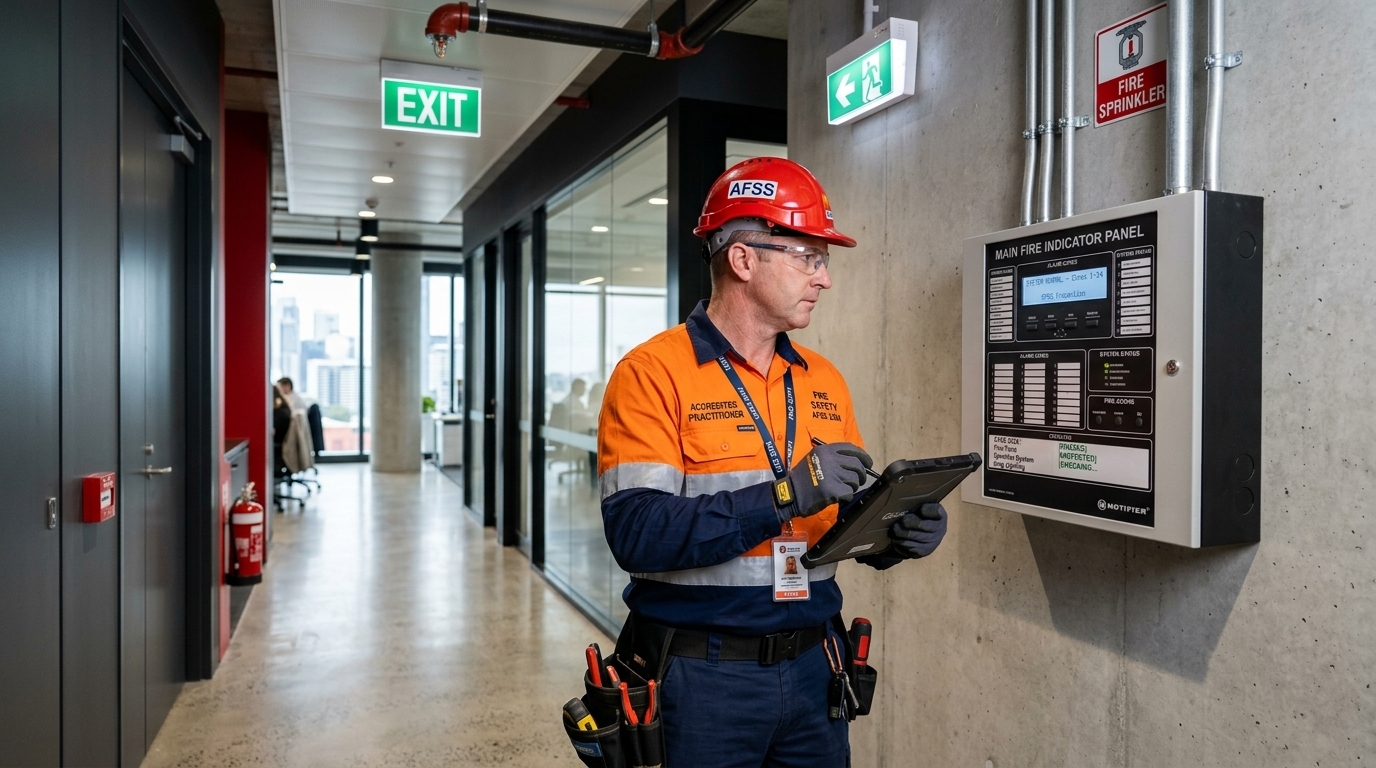
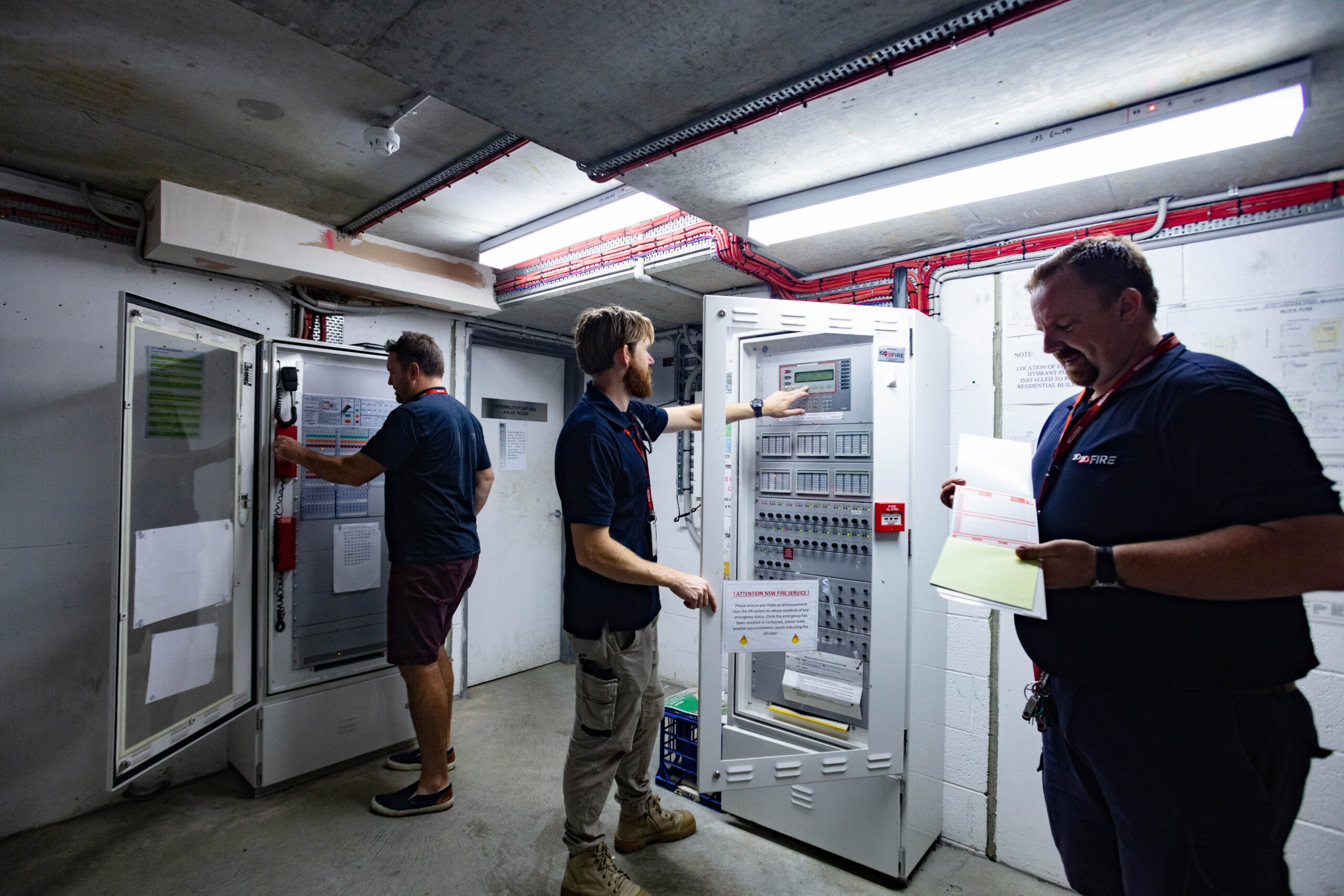
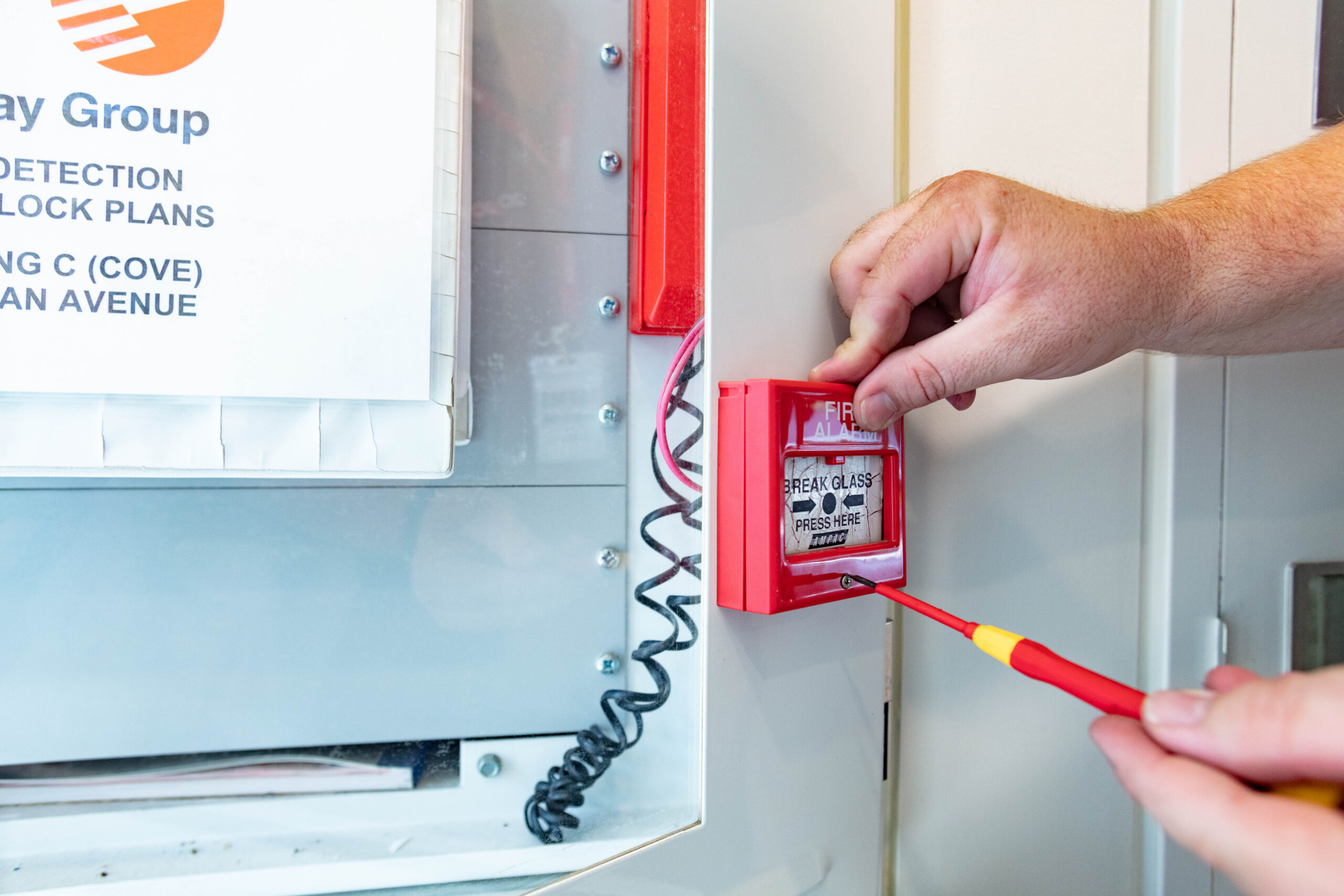
Automatic smoke detection and alarm systems — the detectors, control panel, and occupant warning system, assessed against AS 1670 and AS 7240.
Mechanical smoke control — stair pressurisation, zone smoke control, and smoke exhaust systems designed to keep exit paths tenable.
Paths of travel to exits — the physical routes occupants use to evacuate. Often overlooked, but an obstructed or locked path can invalidate the entire statement.
Warning and operational signs — including exit signs, fire hose reel signs, and door signage.
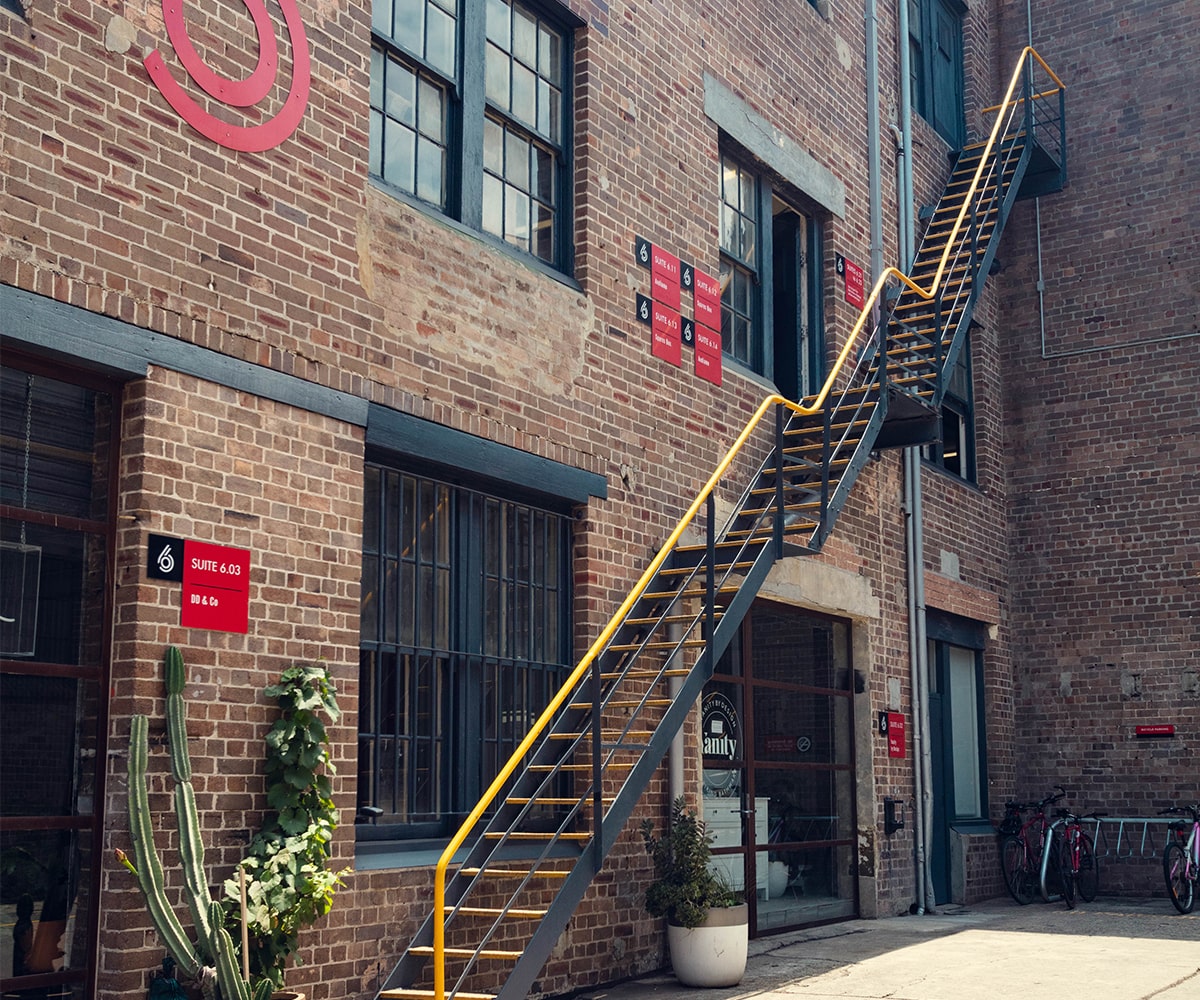
Perimeter vehicle access — for buildings that rely on fire appliance access for firefighting operations.
“Capable of performing” what the standard means
The AFSS does not ask whether each measure is “working” in a loose sense. It asks whether each measure is capable of performing to a specified standard. For most items, that standard is a combination of the performance requirement in the Building Code of Australia and the Australian Standard listed on the Fire Safety Schedule. A tagged-out sprinkler valve, an exit sign with a dead battery, or a fire door that no longer self-closes all fail that test — even if the measure is “mostly” operating.
This is where a properly accredited practitioner matters. An AP(FS) knows which standard applies to each measure, what testing is required to demonstrate performance, and what documentation to keep on file.
When your Fire Safety Schedule is wrong
Buildings change. Refurbishments add new measures; demolitions remove them. If your Fire Safety Schedule is out of date, your AFSS cannot be accurate. 2020 Fire can review your schedule against what is actually installed and, where necessary, work with your local council or a fire engineer and certifier to amend it before it affects your annual statement.
Next steps
If you are unsure which Essential Fire Safety Measures apply to your building, or you suspect your Fire Safety Schedule is missing items, get in touch. We will review your schedule, identify any gaps, and give you a clear map of exactly what your Accredited Practitioner will need to see before your next AFSS is due. For a visual overview of how the annual cycle should run, see our AFSS timeline on this page.